
Not too long ago, a home office was something you saw in fancy listings and thought, well, that's nice. It was an extra perk, like a wet bar or a three-car garage. People didn't really need it, and sellers didn't always bother staging one. Fast forward to today, and that same space is one of the first things buyers ask about.
Whether you work from home full-time, part-time, or just need a quiet corner to pay bills and manage life admin, a dedicated workspace has moved up the priority list in a serious way. This article walks through why that happened, what it means for buyers and sellers, and what actually makes a good home office setup worth having.
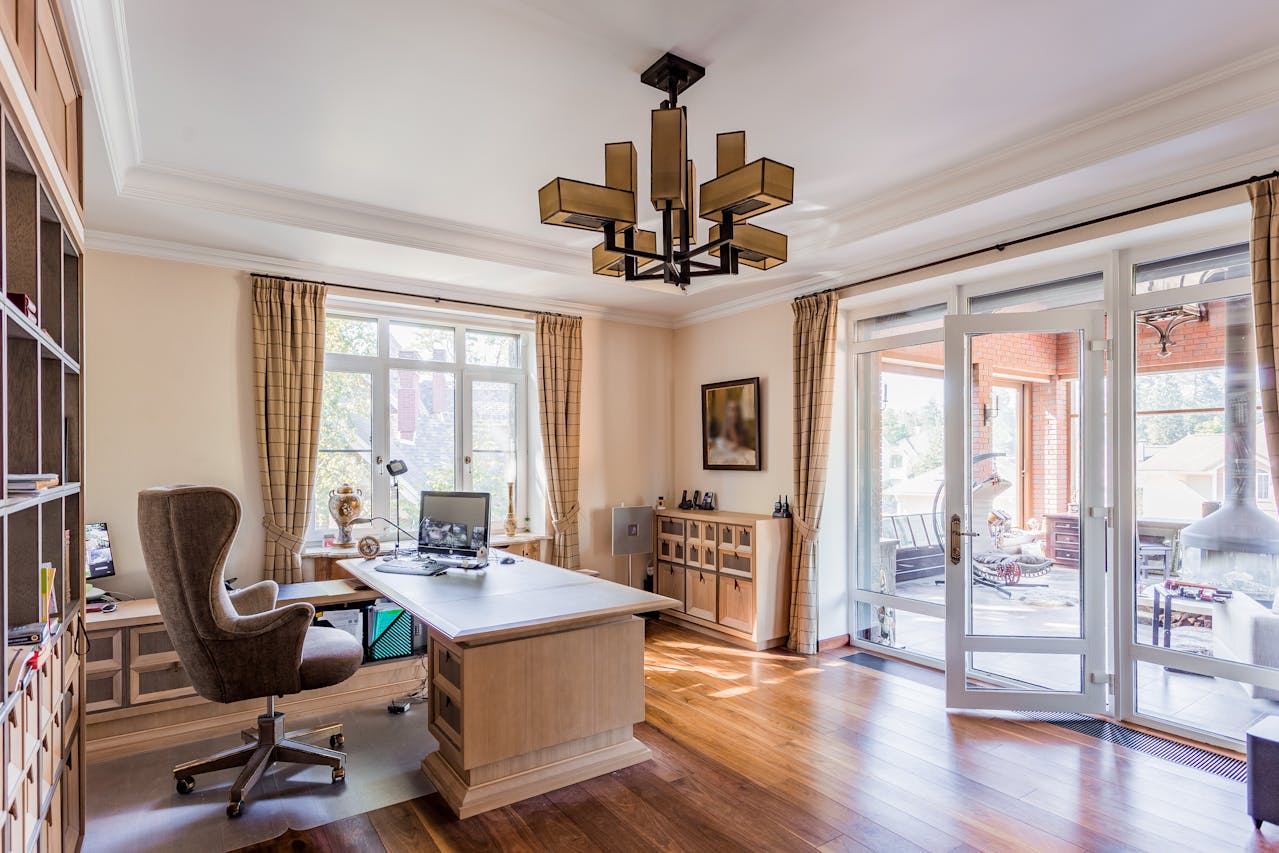
How Working from Home Changed Everything
It started with necessity. When millions of people suddenly had to work from their kitchen tables and bedroom floors, the limits of a home without a real workspace became very obvious, very fast. Dining tables were shared between Zoom calls and homework. Bedrooms stopped feeling like places to rest. The lines between work and home blurred in ways that were genuinely stressful.
That experience shifted how people think about home. A dedicated room with a door that closes started to feel less like a luxury and more like a basic requirement for a functioning household. Even people who went back to the office part of the time realized they wanted a proper space for when they didn't.
Now that remote and hybrid work has settled into a long-term reality for a large portion of the workforce, that preference hasn't gone away. It's actually gotten stronger. People know what it feels like to work in a bad environment, and they're not willing to sign a 30-year mortgage on one.
What Home Buyers Are Looking For Now
Today's buyers are not just hoping for a spare bedroom they can repurpose. They're looking for specific features that make a room actually usable as a workspace. According to surveys of recent home buyers, dedicated office space consistently ranks among the top features people want, often ahead of things like formal dining rooms or large backyards.
What Makes a Home Office Actually Work
- A door for privacy during calls
- Natural light without harsh glare on screens
- Enough outlets and strong Wi-Fi access
- Separation from high-traffic areas in the house
- Room for a proper desk, not just a folding table
This shift has real consequences for the market. Homes that offer a dedicated office, even a converted bedroom or a finished basement nook, tend to attract more interest and move faster. Homes without one sometimes require sellers to get creative with staging to show buyers how the space could be used.
Markets that cater to sellers specifically, including NJ iBuyers ihave started paying closer attention to office space as a value driver when assessing properties. It's now a line item, not an afterthought.
What a Good Home Office Space Needs
Not every spare room makes a good office. A lot of people discover this the hard way after moving in. Here's what separates a genuinely useful workspace from a room that just has a desk shoved into it.
Privacy Is the Foundation
Privacy is probably the biggest factor. If you're on video calls all day, being able to close a door and control the background matters. A glass partition or open loft might look cool in photos, but it falls apart the moment your dog starts barking or your kid walks through mid-presentation.
"A room with a door that closes is worth more than a corner with a nice view."
Lighting Makes or Breaks the Space
Lighting matters more than most people think. Natural light keeps you alert and makes you look better on camera, but it has to come from the right angle. A window directly behind your monitor creates glare. A window to the side is close to ideal. If natural light isn't available, good overhead lighting plus a desk lamp usually gets the job done.
Small Homes Can Still Get This Right
You don't need a McMansion to have a proper home office. Smaller homes can pull this off with smart planning. A dedicated alcove, a converted closet, or even a defined corner of a room with a bookshelf divider can create enough separation to function well as a workspace.
What matters most is that the space is defined. When your brain knows this is where work happens, it's easier to focus when you're in it and easier to disconnect when you leave it. That psychological boundary is worth something, even if the physical boundary is just a rug and a bookshelf.
Sellers: How This Changes Your Listing Strategy
If you're selling and your home has a room that could plausibly work as an office, stage it that way. Don't leave a spare bedroom looking like storage. Set up a desk, clear the clutter, and let buyers see the potential. Listing photos with a staged office consistently perform better than empty rooms or rooms filled with boxes.
If your home genuinely doesn't have an obvious office space, consider flagging where one could go. Buyers are often more flexible than sellers assume. They just need a starting point. Show them the nook under the stairs, the oversized landing, the corner of the primary bedroom. Help them picture it.
Pricing conversations are also shifting. Homes with dedicated office space are commanding a modest but real premium in many markets. It's not always huge, depending on location and price range, but it's consistent enough that it's worth leaning into.
The home office has officially crossed the line from luxury feature to expected amenity. For buyers, that means slowing down during tours and honestly evaluating whether a space will actually work for the way you live and work. For sellers, it means staging that spare room intentionally and pricing accordingly. Either way, ignoring it is no longer an option.